
About Iridology
Iridology complements all therapeutic sciences by providing vital information to help identify root causes of ill health and to guide appropriate treatment strategies. It is a safe, non-invasive analytical discipline that can be integrated with both orthodox and complementary medicine.
Iridology helps individuals understand their constitutional strengths and weaknesses and become more aware of what they can do to support their own health. The iridologist then guides the person on practical ways to address existing imbalances and to manage inherited tendencies.
What is it?
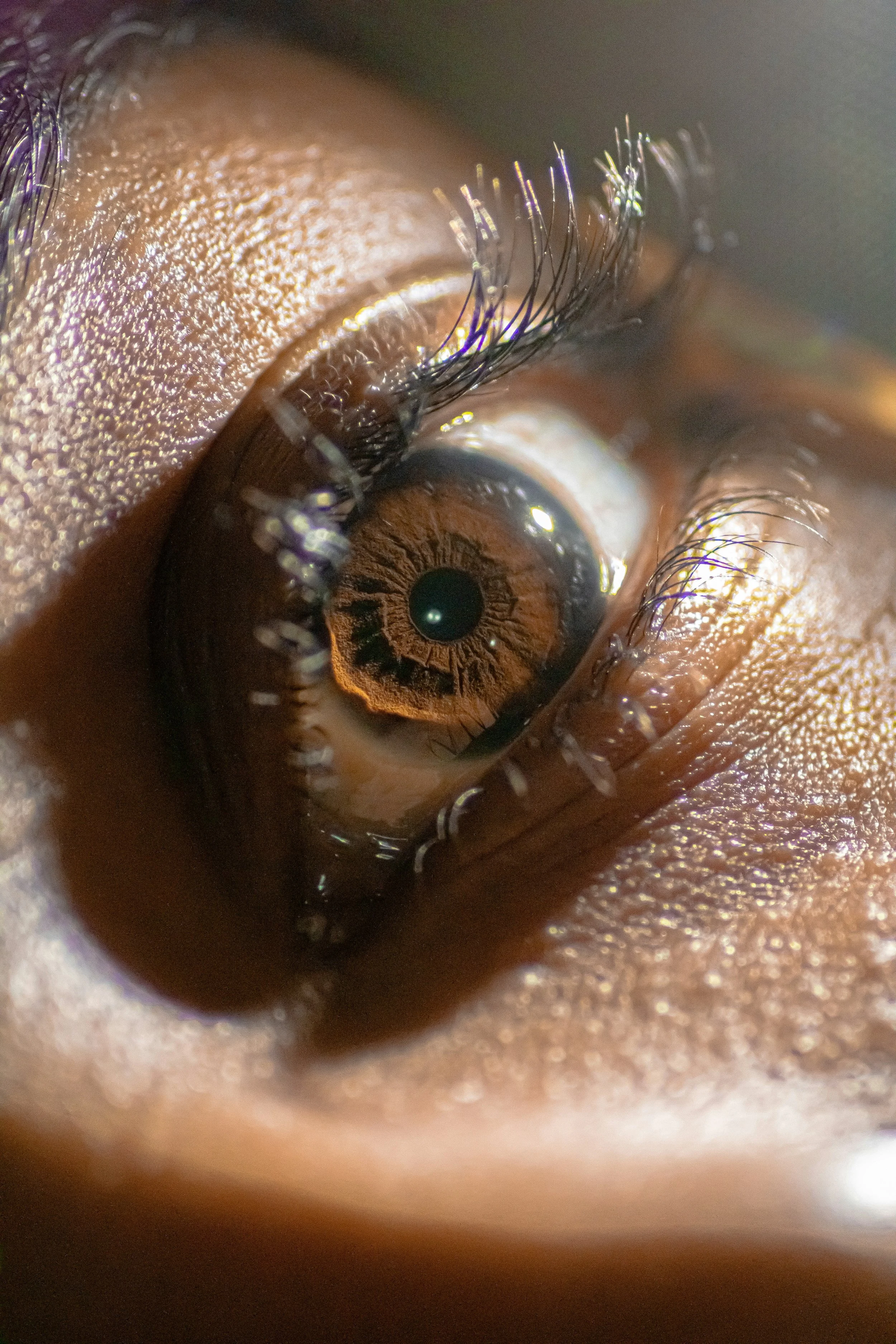
Iridology is the study of the iris – the coloured part of the eye – which is composed of exposed nerve endings connected to the brain. A trained iridologist views these nerve endings as a map, revealing information about:
The body’s genetic strengths and weaknesses
Levels of inflammation and toxaemia
The efficiency of the eliminative systems and organs
In the hands of practitioners who are well versed in pathology, disease processes, anatomy and physiology, the iris offers a remarkably detailed source of information.
The three main constitutional types
There are 3 main Iris colour types, namely “brown”, “blue” and “grey”. There is also an exception to these basic types known as a “Biliary” or “Mixed Constitution”, namely part blue and part brown. This type display a combination of factors that are found in both the blue and the brown eyed types.
Where the iris pigmentation is slight, the iris appears blue as is commonly found in the northern European type, where less pigmentation is required for protection against intense sunlight. On the other hand, with an increase in pigmentation, the colour becomes more grey and proceeds to brown and on to dark brown, as is found in the Mediterranean, Middle Eastern, African and Indian types. Over the generations, interbreeding has, in some instances produced a mixed genotype known as a “Biliary Constitution”, where the person inherits the strengths and weaknesses of both the brown and blue eyed constitutions.
We are, therefore, left with 3 distinct groupings:
the blue eyed constitution known as the Lymphatic Type;
the pure brown eyed constitution known as the Haematogenic Type;
and the combination of the two being the Mixed or Biliary Type.
What is iridology?
Conventional science has not yet fully explained iris phenomena. It generally recognises the iris as a sphincter–dilator muscle that regulates the amount of light entering the eye. The link between iris colour and heredity is medically acknowledged, but attention rarely goes beyond basic eye colour, and usually ignores iris structure and secondary pigmentation, despite emerging research in genetics and embryology suggesting important underlying principles.¹
The eyes are widely recognised as indicators of personal and constitutional factors. We commonly notice hereditary traits (“she has her father’s eyes”), and we infer health and vitality from tired, bloodshot or lacklustre eyes, or from dark circles under the eyes. A “sparkle” in the eyes often conveys joy, excitement or love, while a “glint” may suggest mischief or even malice.
From the earliest civilisations, eyes have been recognised as a window to the individual. In Chinese traditions, tendencies could be discerned from the size, shape and set of the eyes, while in Ayurveda the colour of the eyes forms part of the description of a person’s prakriti (constitution).²
Modern iridology, however, is relatively young. The iris is small and requires magnification to be observed in detail. Even in the mid‑nineteenth century, Ignatz von Peczely, often regarded as the “father of iridology”, had access only to 2× magnification. Advances in optical and photographic technology were essential to the development of iridology as it is practised today.
Every person’s irides are unique. Among approximately seven billion people, no two sets of irides are identical. Beyond colour, the countless structural variations visible in each iris (including the differences between a person’s own two eyes) reflect genetically determined individuality. It is estimated that around 200 differentiating signs can be charted in the average iris, a level of detail that underpins the use of iris-recognition cameras at ATMs and border controls for biometric identification. Iris patterns offer significantly greater security than fingerprinting. Proposed identification schemes in the UK, for example, have considered including iris prints as part of personal biometric data.
Diagnosis or personal assessment?
Iridologists work from the principle that effective treatment and lifestyle planning require an accurate understanding of the individual and of the factors that have shaped their health. These factors – a combination of inherited traits and life experiences to date – are described as a person’s constitution. Contemporary iridology uses the irides to assess both the natal constitution and acquired markers that develop in response to stress and environmental influences across the lifespan.
Contemporary iridologists tend to distance themselves from a narrow notion of “diagnosis” as the simple labelling of disease based on symptoms. They are more interested in the functional dynamics of the organism: how the individual body and psyche respond to the environment over time. Hereditary and embryological patterns of organ response are central to this, and iridological examination aims to read these patterns. This approach allows us to look beyond symptoms – which may represent the body’s attempt to self-correct under stress – and to explore the underlying failure to adapt, often rooted in innate insufficiencies or susceptibilities.
Research programmes evaluating iridology frequently fail to capture its strengths because they tend to focus on rigid diagnostic endpoints rather than functional or constitutional outcomes, such as familial health trends or environmental influences. Nonetheless, work from Russia has reported positive findings for iridology as a diagnostic adjunct when it is intelligently combined with differential diagnostic investigations.³
A recurring criticism of iridology is the risk of over-diagnosis, where the practitioner appears to identify a long list of problems that the patient has never experienced, generating anxiety and inviting criticism when conventional tests do not confirm disease. Dr Joseph Deck, a medical doctor and iridology researcher in the mid‑twentieth century, and a major proponent of constitutional iridology, stressed that iridological findings may be manifest or latent.⁴
This means that any iridological observation should be considered alongside:
Confirmed diagnoses and current presenting symptoms
Detailed medical history
Secondary symptoms suggesting underlying tendencies (e.g. hypoglycaemia as a precursor to diabetes)
Familial medical history
Possible stress- or emotion‑mediated patterns
Only when these aspects are explored can we reasonably say that an iridological hypothesis has been meaningfully tested. Even then, familial patterns and competing pathologies can obscure or override specific susceptibilities (for example, a relative may have a strong diabetic tendency but die of cardiac failure before type 2 diabetes fully develops).
A tool for effective consultation
In any medical or therapeutic consultation, correct diagnosis is important, but so is effective engagement of the patient in their own healing process. Securing genuine compliance is central to therapeutic success. Human communication is complex, and this complexity is especially relevant in clinical settings, where individuals differ in how they understand their health and their place in the world.
Iridology offers two particular advantages here:
A holistic assessment tool that brings together the patient’s symptoms, lifestyle, family background and environment, helping to integrate many visible – and some less visible – aspects of their experience.
A visual aid to communication and learning that mirrors personal experience. The iridologist points out a sign, asks a focused question, and the patient’s response confirms or refines the interpretation. The patient then sees – literally and metaphorically – the rationale for change. Understanding is closely linked to compliance; once the person perceives the need to act, they are far more likely to follow through.
We may not yet have all the answers about the precise mechanisms underlying iridology, and conventional research often struggles because it asks questions from a different paradigm. Nonetheless, many medically trained practitioners who study iridology recognise its relevance in practice. Several studies have shown that conventional medicine often falls short of patient expectations, especially regarding communication and “bedside manner”.⁵ Some commentators suggest that the migration towards complementary and alternative medicine stems, at least in part, from dissatisfaction with the dominant biomedical model and how it is delivered.⁶
Iridology can help to bridge this gap. It has grown partly from within medicine, uses familiar anatomical and physiological concepts, and has been shaped over more than 150 years by medical doctors as well as naturopathic practitioners.
For complementary health professionals, and particularly for naturopaths who emphasise the primacy of the patient in the healing process, iridology is an unparalleled method for integrating patient experience, medical and ancestral history, targeted therapeutic interventions and long-term patient engagement.
About the writer
Peter Jackson-Main is a master herbalist, iridologist, natural healer, author and practitioner. He is Course Leader and Senior Lecturer in Herbal Medicine at CNM (College of Naturopathic Medicine), where he also leads the Postgraduate Course in Iridology.
1 Larsson, M. Pedersen, NL. (2004). Genetic correlations among texture characteristics in the human iris. Molecular Vision. 10, pp. 821-31
2 Pole, S. (2006). Ayurvedic Medicine, the principles of traditional practice. Elsevier, London
3 Abramov, G. Iridology and facts.
4 Joseph Deck, 1965, The Principles of Iris Diagnosis, author pub.
5 McKinley, RK. Middleton, JF. (1999), What do patients want from Doctors? Content analysis of written patient agendas for the consultation. British Journal of General Practice, pp. 786-800. Available at: http://www.ncbi.nlm.nih.gov/pmc/articles/PMC1313530/pdf/10885083.pdf. [Last accessed 26 Jan. 2026]
6 Cant, S. Sharma, U. 1998). Reflexivity, Ethnography and the Professions (Complementary Medicine). Watching you watching me watching you (and writing about both of us), The Sociological Review. 2(6), pp. 244 – 26
Ghasemilou, M. Sahebjamnia, A. (2018). Iridology in Medical Diagnosis System. International Journal of Advances in Science Engineering and Technology. 6(2), pp. 2321–8991. Available at: https://www.iraj.in/journal/journal_file/journal_pdf/6-468-153483637739-43.pdf. [Last accessed 26 Jan. 2026].