
The Collarette
If your iris were a map, the collarette would be the clear ring circling the pupil that marks the “border” between your digestive system and the rest of the body map.
It is often called the autonomic nerve wreath because it sits in a zone that reflects how your nervous system and digestion are working together.
What Is the Collarette, in Simple Terms?
The collarette is the slightly raised, often lighter ring you can see between the pupil (the black centre) and the coloured part of your eye.
Inside your eye, this ring:
Sits near a key blood vessel circle in the iris.
Forms early in life as part of normal eye development.
Lies in an area influenced by the autonomic nervous system (the part that controls things like heartbeat, digestion, and stress responses).
So while doctors see it as an anatomical landmark, iridologists also see it as a “window” into how your body regulates digestion, stress, and energy.
Why Iridologists Pay So Much Attention to the Collarette
Iridologists don’t just look at eye colour. They look at patterns.
The collarette is one of the first places they check because it can give clues about:
Digestive tone (how active or sluggish the gut may be).
Autonomic nervous system balance (how you handle stress and recovery).
Inherited digestive tendencies (what “runs in the family”).
Stress sensitivity and resilience over time.
These factors can point toward areas that may benefit from lifestyle, nutrition, or stress-management support.
Common Collarette Shapes and What They Can Suggest
Iridologists always interpret the collarette in the context of the whole person, but here are some simple patterns they may notice:
1. Tight, Round Collarette
Neat, close, and fairly round around the pupil.
Possible meaning: Strong digestive tone, efficient “inner spring,” and generally good constitutional strength.
Individuals may cope well with stress, but may benefit from relaxation and unwinding
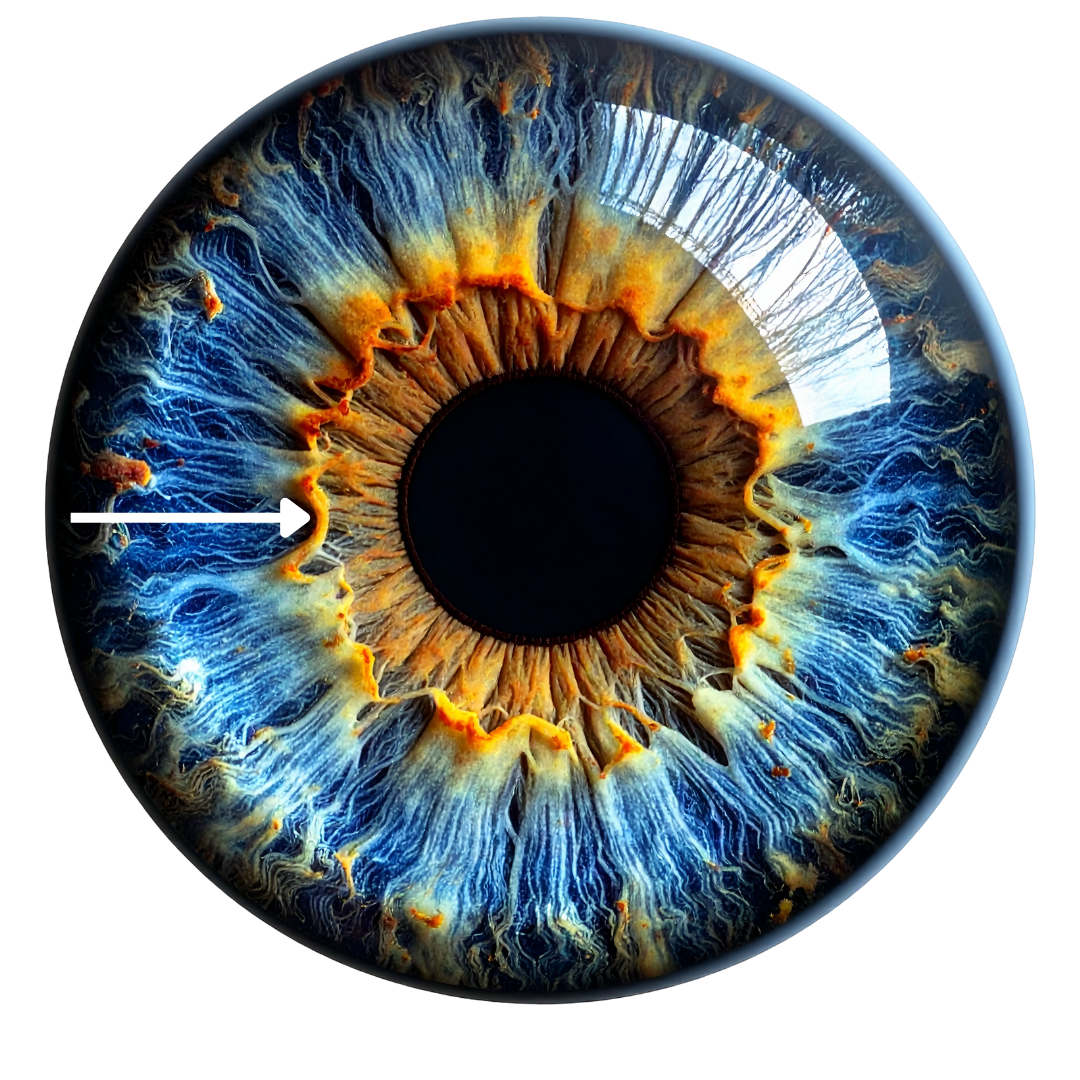
2. Flatter or Irregular Collarette
The ring sits further out or looks uneven in places.
Possible meaning: May suggest more digestive sensitivity, a tendency to feel stress in the gut, or a slower metabolic rhythm.
These people often do well with gentle, consistent routines, supportive digestion, and steady energy habits.
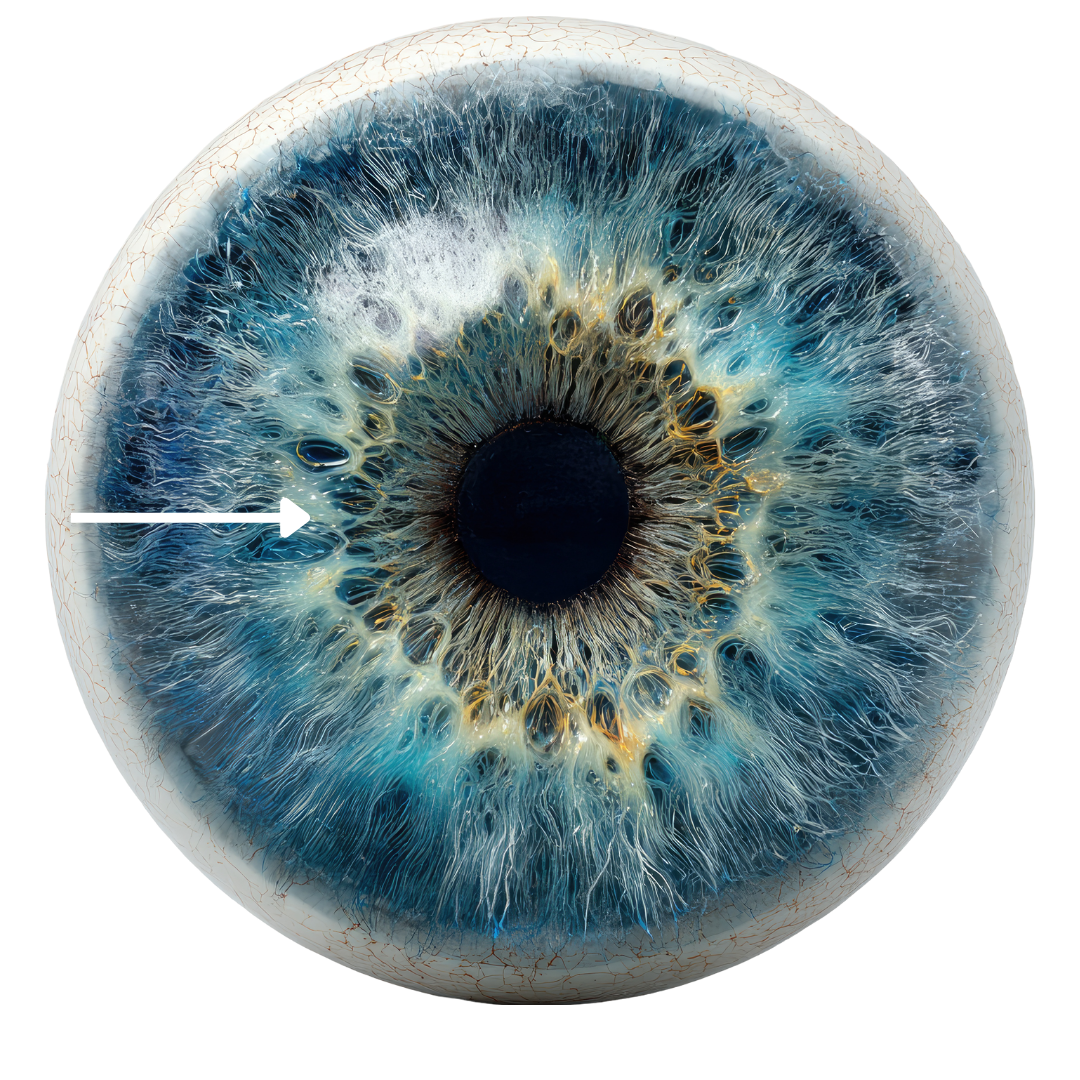
3. Openings or Gaps in the Collarette
Small openings or breaks in the ring at specific positions.
Possible meaning: Traditional iridology links these to particular body or organ zones that may need extra care or support.
Can guide personalised advice around nutrition, lifestyle, and functional testing, where appropriate.
4. Scalloped or “Wavy” Edge
The edge of the collarette looks ruffled, scalloped, or toothed rather than smooth.
Possible meaning: Often associated with a more reactive nervous system and greater emotional or sensory sensitivity.
These people may benefit from nervous-system soothing strategies, sleep optimisation, and gentle, grounding routines.
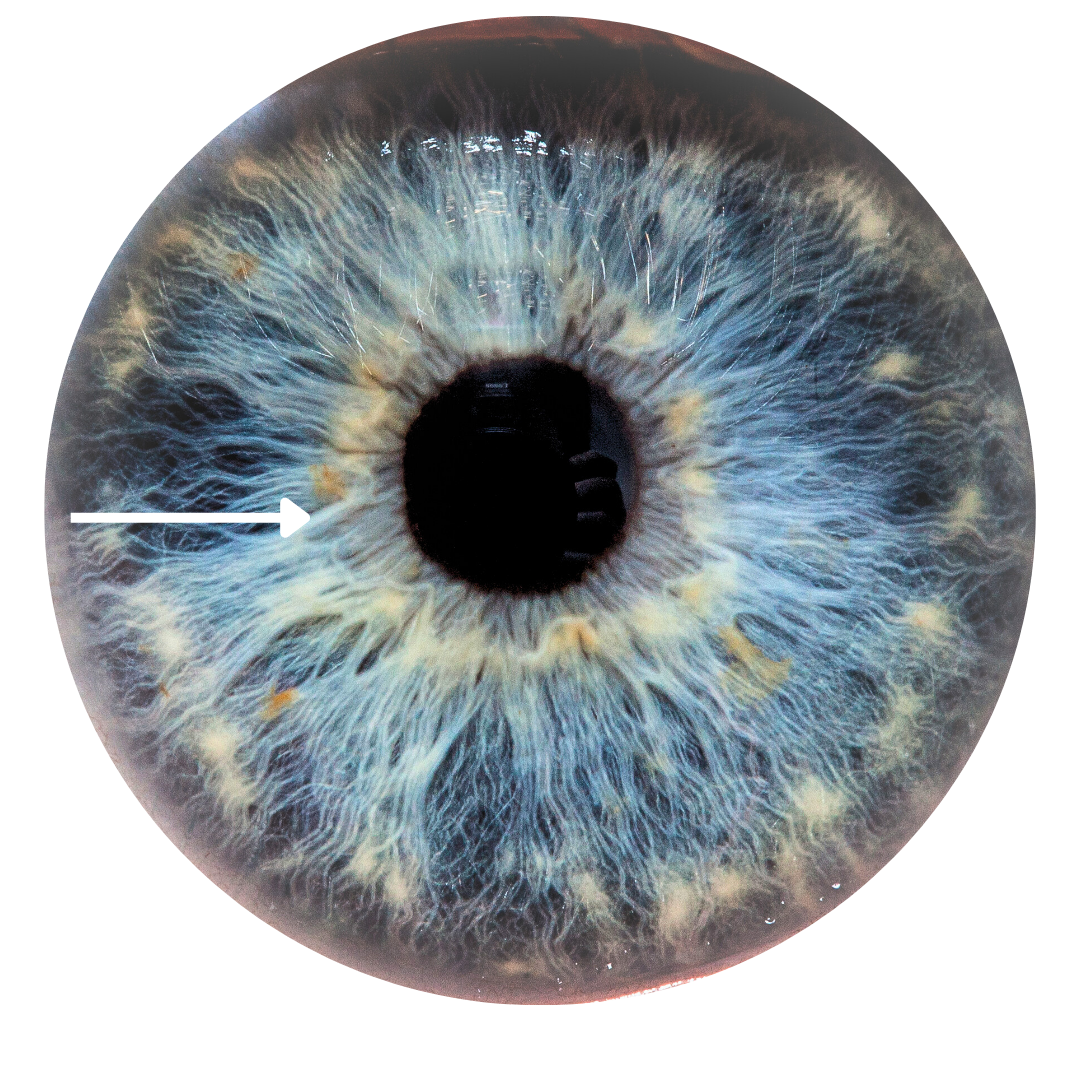
5. Barely visible Collarette
When the collarette is very faint, “washed out,” or seems to melt into the surrounding iris fibres, most iridology authors treat it as a sign of reduced tone. It may indicate:
A more delicate, sensitive nervous system, rather than a robust, reactive one.
A tendency toward lower autonomic drive (underactive or easily depleted), rather than high sympathetic “fight–flight” output.
Possible low digestive tone and weaker bowel motility, with a greater need for gentle, supportive measures (e.g. easy-to-digest foods, steady routines, nervous-system support)
The Science – Kept Simple
From a medical viewpoint, the collarette is a normal part of the iris structure.
From a functional and iridological viewpoint, it sits in a zone heavily influenced by:
Blood flow.
Nerve supply.
The autonomic nervous system (the “automatic pilot” that runs digestion, heart rate, and stress responses).
This overlap is why iridologists use the collarette as a constitutional marker: it gives visual clues about how your “inner wiring” handles digestion, stress, and recovery over the long term.
How Seeing Your Collarette Can Help You
With modern imaging tools, a specific camera lens, or a simple magnifier over a phone:
Your collarette can be clearly photographed and mapped.
Its shape, position, and variations can be highlighted for you.
You receive wellness-focused explanations of what these patterns may suggest about your digestion, stress responses, and lifestyle needs according to your medical history and current health.
You’re not just told “you have blue or brown eyes,” you’re shown how your eyes may reflect the way your body function.
The Collarette: The Heart of Constitutional Iridology
If the iris is a map, the collarette is the compass.
It helps iridologists:
Understand your digestive tendencies.
See how you may react to stress.
Recognise your constitutional strengths and sensitivities.
Tailor lifestyle and nutrition advice to you, rather than using a one-size-fits-all approach.
Once you can “read” this one ring, iridology becomes clearer, more personal, and far more meaningful, both for practitioners and for the people they support.